
What is brand activation in marketing? A practical guide
- Jan 7
- 12 min read
If you’ve heard the term ‘brand activation’ thrown around and felt a little lost, you’re not alone. The definitions are often vague, making it sound like just another marketing cliché that doesn’t quite apply to a growing business.
It makes complete sense if you feel stuck. Without a clear handle on what brand activation actually is, it’s impossible to know if it’s something you should be doing, let alone how to do it well.
Let’s clear this up. Brand activation is simply the process of bringing your brand to life through a memorable experience. It’s about moving beyond just telling people what you do, and instead, letting them feel it for themselves.
Why Brand Activation Matters
It’s easy to dismiss brand activation as something for big consumer companies with huge budgets for pop-up shops and flashy events. But the core idea is incredibly relevant for B2B and tech businesses, especially when you're trying to build trust and momentum in a crowded market.
At its heart, brand activation is about creating a genuine interaction. It’s a deliberate effort to forge an emotional connection between a person and your business.
It’s Not Just Another Campaign
Most marketing is about broadcasting a message. We run ads, post on social media, and send emails. These are all essential, but they're often one-way conversations. Brand activation flips that, creating a space for a two-way exchange.
Think of it this way: your brand is a promise of value. Activation is where you let a potential customer experience that promise firsthand, even on a small scale.
This is where a lot of teams get stuck. They picture activation as a huge, complicated event, but it doesn't have to be. For a SaaS company, an activation could be a highly practical, hands-on workshop for ten of your ideal clients, not a giant booth at a conference. For a closer look at event-based ideas, this a guide to corporate event activation strategy is a fantastic resource.
From an Idea to a Feeling
Ultimately, activation is about building a feeling. Does your brand feel innovative? Helpful? Reliable? An activation is your chance to prove it, not just say it. It makes your brand identity stick by creating a memory, turning your company into something more than just a name on a screen.
Before you can bring your brand to life, you need to know what it stands for. That's why a small business needs a strong brand identity in the first place—it's the foundation for any meaningful interaction you want to create.
Activation vs. Awareness: Getting Clear on the Difference
It’s easy to see why marketing teams often use ‘activation’ and ‘awareness’ interchangeably. They sound similar, right? But if this is happening in your business, it’s a red flag that your strategy is probably a bit muddled, and you're likely spending money without a clear goal.
If you feel stuck on this, it makes perfect sense. Without a sharp distinction between these two concepts, it’s nearly impossible to know what to focus on.
Let's clear this up. The difference is simple, but it’s critical.
Brand awareness is passive. It's about making sure people know your brand exists. Think of it like someone hearing your company's name at a conference. They might recognise it later, but that’s as far as it goes. Awareness is about familiarity.
On the other hand, brand activation is active. It's about creating a genuine experience that invites people to interact with your brand. It’s the difference between someone hearing your name and them being personally invited to a hands-on workshop you’re running at that same conference. Activation is all about participation.
From Telling to Experiencing
Awareness tells people who you are. Activation shows them.
This journey from telling, to showing, to experiencing is where real marketing momentum comes from. To really get the difference, think about the contrast between something like brand awareness videos, which are designed for broad reach, and an interactive product trial, which demands direct engagement.
This diagram shows how you move a potential customer from just knowing about you to truly experiencing what you offer.
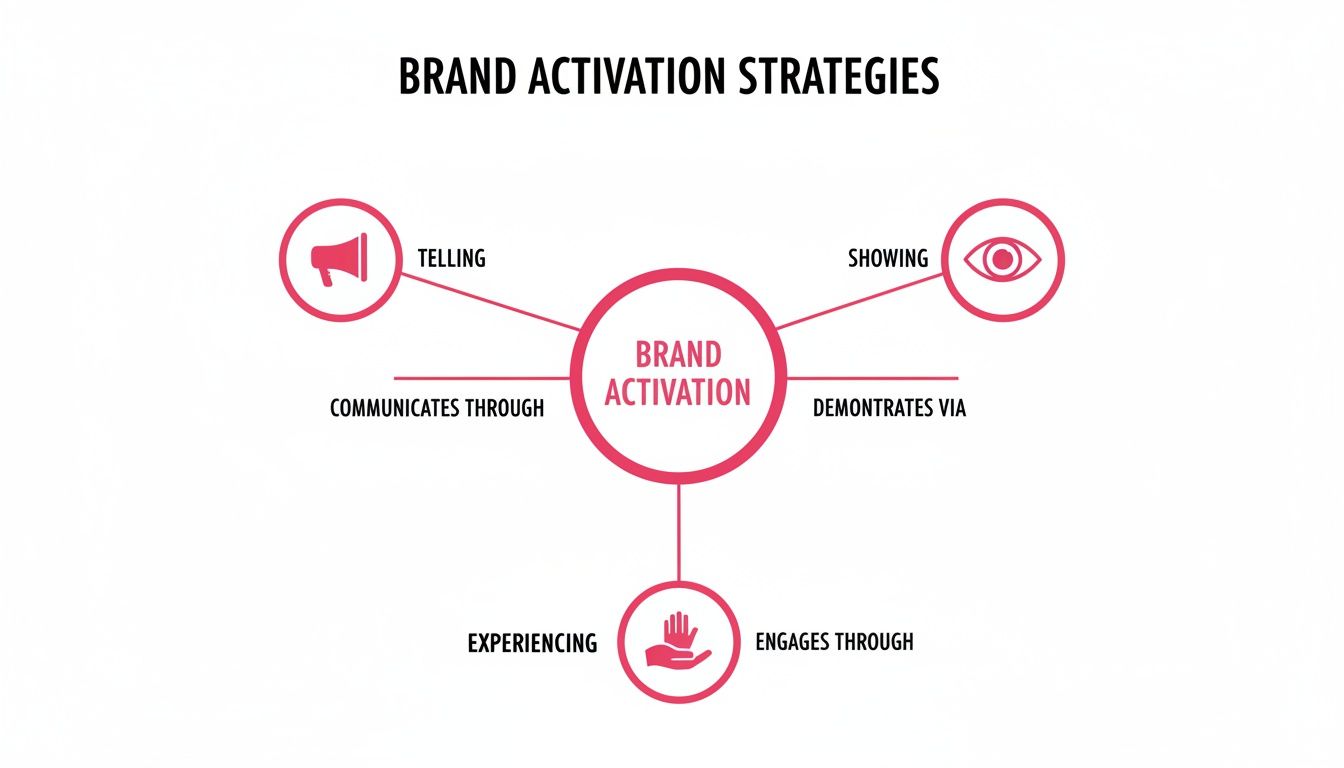
The crucial insight here is that activation builds on the foundation of awareness. It takes that passive knowledge and turns it into an active, memorable experience.
To make this distinction even clearer, let's break it down.
Activation vs. Awareness: A Practical Comparison
Aspect | Brand Awareness | Brand Activation |
|---|---|---|
Primary Goal | Interaction. Getting people to actively engage with your brand or product. | |
Audience Mindset | Passive. They are simply receiving information about you. | Active. They are invited to participate, do something, or experience something. |
Core Action | "Telling" – through ads, content, social media posts. | "Showing & Experiencing" – through demos, trials, events, workshops. |
Key Metric | Reach, impressions, share of voice, website traffic. | Engagement rate, sign-ups, leads generated, product trials started, event attendance. |
Example | Running a LinkedIn ad campaign targeting a specific industry. | Hosting a webinar with a live Q&A for that same industry. |
Ultimately, awareness is about being seen, while activation is about being felt. You need both, but you need them at the right time.
When to Focus on Each
So, which one should you be prioritising? It depends entirely on where your business is right now.
Early Stage or Entering a New Market? Your focus should be 80% on awareness. If nobody knows who you are, an activation campaign will fall flat. You need to build that baseline of familiarity first.
Established but Growth Has Stalled? If people recognise your name but aren't engaging, it’s time to put 80% of your effort into activation. You have their attention; now you need to give them a compelling reason to take the next step.
Most teams get stuck because they try to do both at once with a limited budget and end up succeeding at neither. This is usually where a sprint approach creates clarity quickly, allowing you to dedicate all your resources to one clear objective before moving on.
You don't need to do everything at once. You just need to do the right thing next.
Practical Types of Brand Activation for Your Business
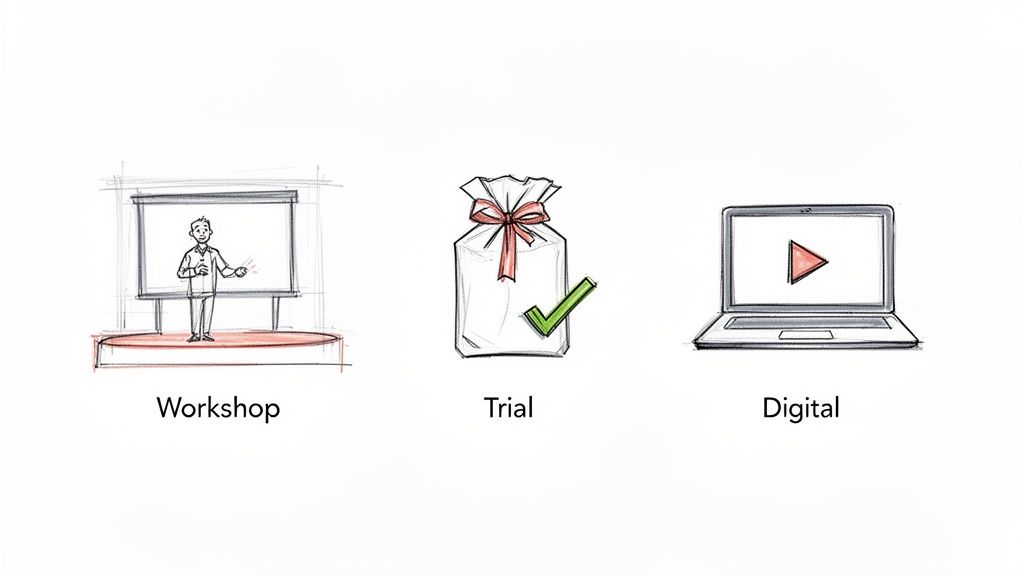
So, what does brand activation actually look like for a growing tech or B2B business? If your mind jumps to expensive pop-up shops or massive event sponsorships, you can relax. The most effective activations are rarely about the size of your budget; they’re about focus and relevance.
For a founder, this is simply about choosing the right tool for the job. You don’t need to juggle a dozen different tactics. You just need one or two that are perfectly aligned with how your ideal customers think and what they genuinely need.
Let's walk through a few practical options that make sense without needing a huge marketing team or a bottomless budget.
Experiential Marketing That Makes Sense
For a B2B or SaaS company, experiential marketing doesn't mean building a theme park. It’s about creating a valuable, hands-on experience that proves your expertise and lets potential customers feel what it’s like to work with you.
This is often where a structured sprint helps a team design and execute a single, high-impact experience from start to finish.
Think about these simple, powerful examples:
A Targeted Workshop: Host a small, invite-only workshop for 10-15 of your ideal clients. Pick one of their most painful problems and solve it for free. This instantly positions you as a trusted expert and gives them a direct taste of the value you deliver.
An Exclusive Roundtable: Bring together non-competing leaders in your industry for a facilitated chat on a critical topic. You’re not there to pitch; you’re there to build community and show you have your finger on the pulse of their world.
Sampling and Trials the Right Way
"Try before you buy" is the oldest trick in the book, but for software and complex services, it needs a bit more thought. An unstructured trial often leaves users feeling confused and overwhelmed, which defeats the entire purpose. Sampling and trials need structure to be effective.
A successful trial activation guides the user towards a specific "aha!" moment. It's a curated experience, not just access to a tool.
The real objective of a trial isn't just to let people use your product. It's to ensure they experience the value of your product as quickly as possible.
Consider a high-touch onboarding sprint for new trial users, where your team guides them through the most critical features. This simple step turns a passive trial into an active, supportive experience that builds confidence and connection.
Digital Activations for Scalable Engagement
Finally, digital activations allow you to create interactive experiences that can reach a broader audience without the logistical headache of a physical event. This isn't about running another stale webinar; it's about making your audience active participants in the experience.
Interactive Tools: Build a simple calculator, a quiz, or a diagnostic tool that helps potential customers understand their problem better. It provides immediate value and captures highly relevant data for you.
Live 'Breakdown' Sessions: Instead of a slide deck, host a live session where you deconstruct a real-world problem or a successful project. Make it engaging with polls and a live Q&A.
These kinds of activities don't demand massive budgets, but they do require a thoughtful approach. They are often central to effective grassroots marketing, which focuses on building genuine community connections. You can find more practical ways to grow without a big advertising budget in our guide to grassroots marketing.
The key is to choose one path and execute it with clarity and purpose.
How to Measure If Your Brand Activation Is Working
You’ve just wrapped up a brilliant brand activation. The feedback felt great, the team is buzzing, and there's a real sense of accomplishment. But then comes that dreaded question from the finance team or the board: “Was it worth it?”
If you’ve ever struggled to connect your marketing efforts to tangible business results, you’re not alone. It’s easy to get lost in vanity metrics like ‘impressions’ or ‘likes’. They feel concrete, but they don't actually tell you if the activation worked.
Measuring an activation isn't about tracking every number you can find. It’s about choosing the right numbers—the ones that give you the clarity and confidence to decide what to do next.
Moving Beyond Vanity Metrics
The first step is a mental shift: stop measuring activity and start measuring impact. Instead of obsessing over how many people saw your activation, ask what they did because of it. That’s where the real insights are.
Here are a few practical KPIs that tie your activation directly to business outcomes:
Lead Quality Score: Did the leads from your activation convert faster or close at a higher contract value than your usual leads? This is a dead giveaway that you attracted the right crowd.
Sales Cycle Length: For attendees who entered your sales pipeline, how long did it take to close the deal? A shorter cycle is a strong signal that the activation built a serious amount of trust.
Product Trial Engagement: If your activation involved a free trial, did people use the key features? High engagement is one of the best predictors of a future paying customer.
The Power of Qualitative Feedback
Numbers tell you what happened. Stories tell you why. Qualitative feedback is how you get those stories, and it’s the key to making your next activation even better. This goes way beyond asking, “Did you enjoy it?”
Try asking more pointed questions that get to the heart of their experience:
"What was the one thing that stood out to you most?"
"How did this experience change the way you see our company?"
"What's one thing you learned that you'll actually use this week?"
These questions give you the context behind the data. It's a gap we often see when we first start working with a team—they have spreadsheets full of numbers, but no real story to explain them. A simple feedback loop builds that narrative for you.
This measurement challenge is a massive issue. In Australia and New Zealand, despite huge investments in brand activation, a staggering 2% of senior marketers feel strongly confident they can track its ROI. The biggest hurdle they face is measuring experiential events (33%), even though it’s a top investment for driving brand impact. The Activation Effectiveness Barometer has some great insights on how others are trying to solve this.
Understanding these metrics is also a crucial part of building an effective customer journey. To see how these touchpoints fit into the bigger picture, check out our guide to customer journey mapping for marketing clarity. It will help you connect your activation to the entire customer experience.
A Real-World Example of Brand Activation
It’s one thing to talk about theory, but seeing a concept in action is what really makes it click. Let’s look at a tangible example to see how brand activation goes from a marketing idea to a real-world result. This is often the best way to get that "ah, I get it now" feeling.
We’re going to break down a brilliant activation from the performance shoe brand, Hoka. They wanted to connect with the Sydney running community in a way that went far beyond just trying to sell shoes.
Hoka’s FlyLab Activation
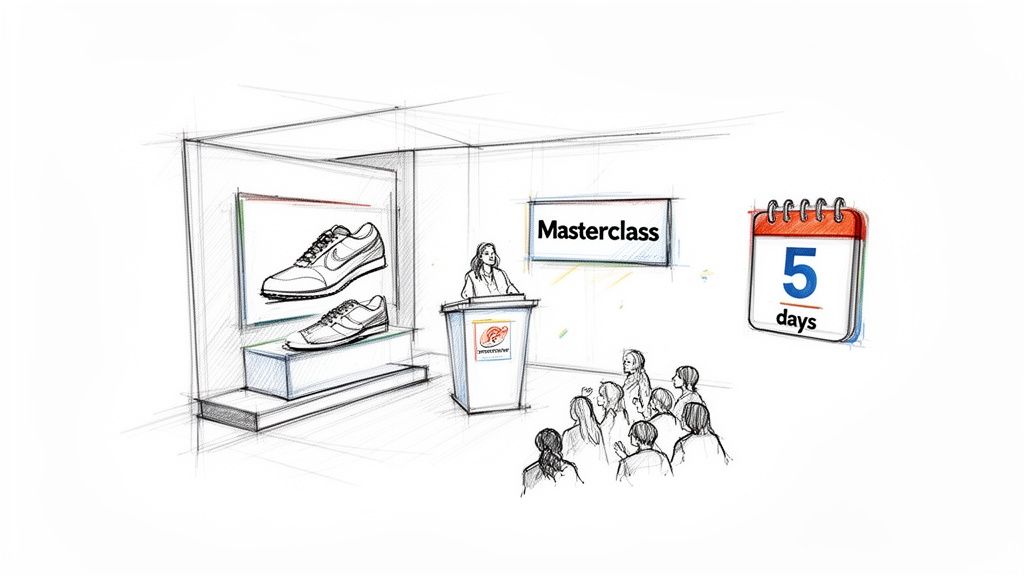
Instead of running a standard ad campaign, Hoka created the ‘FlyLab’ – an immersive, five-day experience. This wasn't your average pop-up shop. It was a carefully planned event designed to give runners genuine value and a memorable interaction with the Hoka brand.
The FlyLab brought together a few key elements:
Product Demos: Runners could actually try out the latest shoes and feel the technology for themselves.
Expert Masterclasses: Hoka brought in physios, running coaches, and nutritionists to host sessions that solved real problems for their target audience.
Community Hub: The space itself became a natural gathering point for local runners, helping to build a real sense of community around the brand.
With this approach, Hoka transformed itself from just another product on a shelf into a genuine partner in a runner's journey. They weren't simply telling people their shoes were great; they created an entire environment that proved their commitment to the sport and the people who love it.
Why It Delivered Momentum
This wasn't just about creating a good vibe; it was a strategic move that drove serious business momentum. The Hoka FlyLab activation in Sydney was a key part of a strategy that fuelled a massive 25x sales growth in Australia.
The event helped double brand awareness from 11% to 23% in just one year, with participants spending an average of six minutes actively engaging with the brand. You can read more about Hoka's incredible results to see the clear line between creating an experience and driving growth.
The lesson here is clear: a focused, valuable experience for a specific community will always outperform a generic message broadcast to the masses.
This is a perfect example of what a focused promotion sprint can achieve. When we embed with a team, our first goal is to find this kind of high-impact opportunity—turning an abstract marketing spend into a structured activation that creates clarity, connection, and measurable forward motion.
Your First Step in Brand Activation
Knowing what to do is one thing; knowing where to start is another. This is often where good intentions and momentum go to die. If you're looking at all the possibilities and feeling a bit paralysed, that’s completely normal. The good news is, you don’t need a massive, complicated plan to get the ball rolling.
Before you even dream up a campaign or sketch out an event, your very first step is to get crystal clear on your positioning. This is the foundation for everything else, and it’s the exact gap we fix first when we embed with a team to build structure.
Start With Foundational Clarity
Ask yourself two simple, but surprisingly tough, questions:
Who do we really serve? I mean, get specific. Not just "tech companies," but "early-stage agtech founders struggling with their first go-to-market plan."
What specific experience or feeling do we want them to have with our brand? Do you want them to feel understood? Empowered? Like they've just found a secret weapon?
Answering these gives your activation a genuine purpose. It’s the difference between just making noise and designing an experience that actually connects with someone on a human level.
And that connection is powerful. Experiential brand activations have a huge impact, with 91% of participants reporting higher purchase intent after an event and 40% confirming they felt more loyal to the brand. You can dig into more of the numbers if you want to discover key experiential marketing statistics on expocentric.com.au.
If this foundational work feels messy or difficult, that’s a sign you’re on the right track. You’re not behind; you’re just at the point where a little structure goes a long way.
Focus on fixing this one thing before you touch anything else. Nail your positioning, define the experience you want to create, and you'll have the clarity and confidence to build an activation that actually works.
Got Questions? We've Got Answers
Even after breaking it all down, it's natural to have a few questions swirling around. The theory is one thing, but figuring out how brand activation fits into your business is another challenge altogether.
Here are some of the most common questions we hear from founders trying to get this right.
What's the Real Cost of a Brand Activation Campaign?
This is the big one, isn't it? The truth is, there’s no magic number. A brand activation could be a relatively low-cost interactive webinar, or it could be a massive, multi-day physical event. The budget isn't the point; the focus is.
A smaller, laser-focused activation that creates an unforgettable experience for a handful of your ideal customers is worth far more than a huge, flashy event that nobody remembers. So, start with your goal and your audience, and then design an experience that makes sense for your budget, not the other way around.
Is This Really a Thing for B2B Companies?
One hundred percent, yes. It's easy to picture a pop-up shop for a cool sneaker brand and think activation is just for B2C, but the core idea is even more powerful in B2B.
Forget consumer pop-ups; think hands-on workshops for your most important accounts. Think exclusive roundtables where industry leaders can finally talk openly. Or what about an interactive tool that lets a prospect feel what it's like to use your software? B2B is all about building trust and relationships, and creating an experience is the fastest way to do that.
How Long Should an Activation Campaign Actually Run?
This really depends on what you're doing and what you want to achieve. A live event might be over in a day, but a digital campaign could easily run for a few weeks or more.
But here’s a better way to think about it: focus on the campaign's ‘long tail’. The real magic is in the buzz you build beforehand and the conversations you continue long after the main event is over. The activation itself might be short and sweet, but a smart strategy ensures its impact ripples out for months.