
Service Content Marketing That Actually Connects
- Jan 27
- 10 min read
You’re creating content. You’re publishing it regularly. You might even have a blog, a newsletter, and a LinkedIn presence. But nothing is happening. Leads are sporadic, the sales pipeline is unpredictable, and it feels like you’re shouting into an empty room.
That feeling of frustration isn’t a sign you’re failing. It’s a symptom of a deeper problem: your content is missing the structure it needs to actually work.
Why most service content marketing feels aimless
Most service businesses dive straight into creating ‘stuff’. The focus goes to the output—the blog post, the social media update—without building the framework that makes any of it connect. This leads to random acts of marketing that feel chaotic and produce zero momentum.

It’s an easy trap. Founders are wired for action. But without a clear strategy, all that action just creates noise. You end up with a library of content that doesn’t speak to your ideal client or show them a clear path forward.
This is usually where a sprint approach creates clarity quickly. By focusing on a single, core theme, you can build momentum instead of just adding to the noise.
A calmer, more structured way forward
The answer isn't to work harder or publish more. It’s to be more deliberate. It’s about introducing a calmer, more structured way of thinking that turns content from a hopeful expense into a reliable asset.
Here’s a practical example:Imagine a boutique IT consultancy. They’re writing about broad topics like “cybersecurity trends,” which is what everyone else is doing. A structured approach would have them create a targeted series of articles that directly address the specific security anxieties of finance managers in mid-sized law firms—their ideal client.
That small shift changes everything. It gives your team direction, builds your confidence, and starts creating real, tangible momentum.
Find your point of view before you write a word
Before you create anything, you need absolute clarity on two things: who you help and the specific problem you solve. I know it sounds painfully basic, but this is the exact spot where most content marketing for service businesses falls apart.
It’s why your content feels generic. It’s why it gets ignored.
Founders often breeze past this because it feels too simple. The result? Content that tries to speak to everyone, which ends up connecting with no one. This is the root cause of that nagging feeling that you’re just adding to the noise.
When we embed with a team, the first thing we fix is this exact gap. We don’t start with blog topics; we build the foundational structure that informs every marketing decision from that point on.
Move beyond superficial personas
Most companies have buyer personas. You’ve probably seen them—“Marketing Manager Mary” who likes yoga and has two kids. These are mostly useless for writing content that connects. They don’t get to the heart of Mary’s real-world frustrations.
To develop a true point of view, you have to dig deeper and understand:
What they've already tried: What solutions have failed them? Knowing this helps you empathise with their frustration.
What they secretly believe: What assumptions are they holding about their problem that might be wrong? This is where you can offer a genuine “aha” moment.
What success really looks like for them: Forget business metrics. What does solving this problem mean for their career, their stress levels, or their peace of mind?
Understanding these nuances is what lets you stop making noise and start having a direct, valuable conversation. This level of detail is also fundamental to a successful brand strategy, something we explore further in our founder's guide to clear branding and messaging.
From generic content to targeted conversations
The table below shows how this shift in thinking changes everything. It’s a move from shouting broadly to speaking directly to the people who need you most.
Common Approach (Broad) | Focused Approach (Structured) |
|---|---|
Writes about general topics like "the benefits of X". | Addresses a specific pain point the ideal client is facing right now. |
Tries to appeal to every possible customer. | Creates content exclusively for a well-defined audience, using their language. |
Content feels interchangeable with competitors. | Develops a unique angle or "point of view" that no one else has. |
Measures success with vague metrics like traffic. | Focuses on generating qualified conversations with the right people. |
Leads to a high volume of low-quality leads. | Attracts a smaller number of highly-qualified leads who are already sold on your approach. |
This isn't just a minor tweak; it's a fundamental change in how you think about marketing. It’s about building a system that consistently brings you the right kind of clients.
An example of a strong point of view
Let’s look at a real-world example. Imagine a B2B finance consultancy. Their old content was all about "the benefits of financial forecasting"—generic, boring, and utterly unhelpful.
After we dug into their ideal client—the founder of a scaling tech company—they realised the real pain wasn't a lack of forecasting. It was a deep-seated fear of misreading the numbers and making a catastrophic hiring decision.
Their new point of view became: “Stop obsessing over complex financial models. What you actually need is a simple framework to make confident growth decisions without becoming a finance expert.”
See the difference? This is specific, empathetic, and immediately tells the founder, "I get it."
Before you create another piece of content, it's critical to define your audience and unique value proposition. For a deeper dive on this, check out this ultimate positioning guide for content marketing success.
This isn’t about flashy messaging. It's about achieving a level of clarity that makes you the only logical choice for the client you were built to serve.
Build your content engine with a sprint process
Sustainable content marketing isn’t built on random acts of inspiration or a chaotic, always-on content calendar. That’s a one-way ticket to burnout. It feels like you’re constantly feeding a machine that’s never satisfied, and the quality of your thinking suffers.
There’s a calmer, more structured way: the sprint process. Instead of working from an endless to-do list, you work in focused blocks of time. This approach brings clarity and predictability, turning content creation from a reactive chore into a system that builds momentum.
The Australian content marketing industry has ballooned to $453.2 million, with businesses in the space growing by 9.2% each year. This isn't just noise; it’s a clear signal that companies now realise structured content gets results. In fact, 74% now have a documented content plan. For a service business, a system like a content sprint is no longer a 'nice-to-have'—it's essential. You can discover more insights about Australian content marketing trends and see just how much of a difference a documented strategy makes.
What a content sprint looks like
A content sprint is a repeatable process for planning, creating, and distributing a cohesive batch of content over a set period—usually two to four weeks. Most teams struggle because they’ve never had someone step in to structure the work. Without a framework, everything feels overwhelming.
The basic flow is straightforward:
Pick one theme. Based on your point of view, you choose one core topic for the entire sprint. For a cybersecurity firm, a theme might be "Ransomware Preparedness for Law Firms."
Plan a pillar piece. This is your big, central piece of content—an in-depth guide, a webinar, or a detailed case study. It's the most valuable asset you’ll produce.
Map out your splinter content. You strategically break down the pillar piece into smaller, bite-sized assets. That one guide can be repurposed into a dozen smaller pieces without extra research.
Before you can pick a theme, you have to define your point of view. It’s the essential first step that gives your entire sprint purpose.
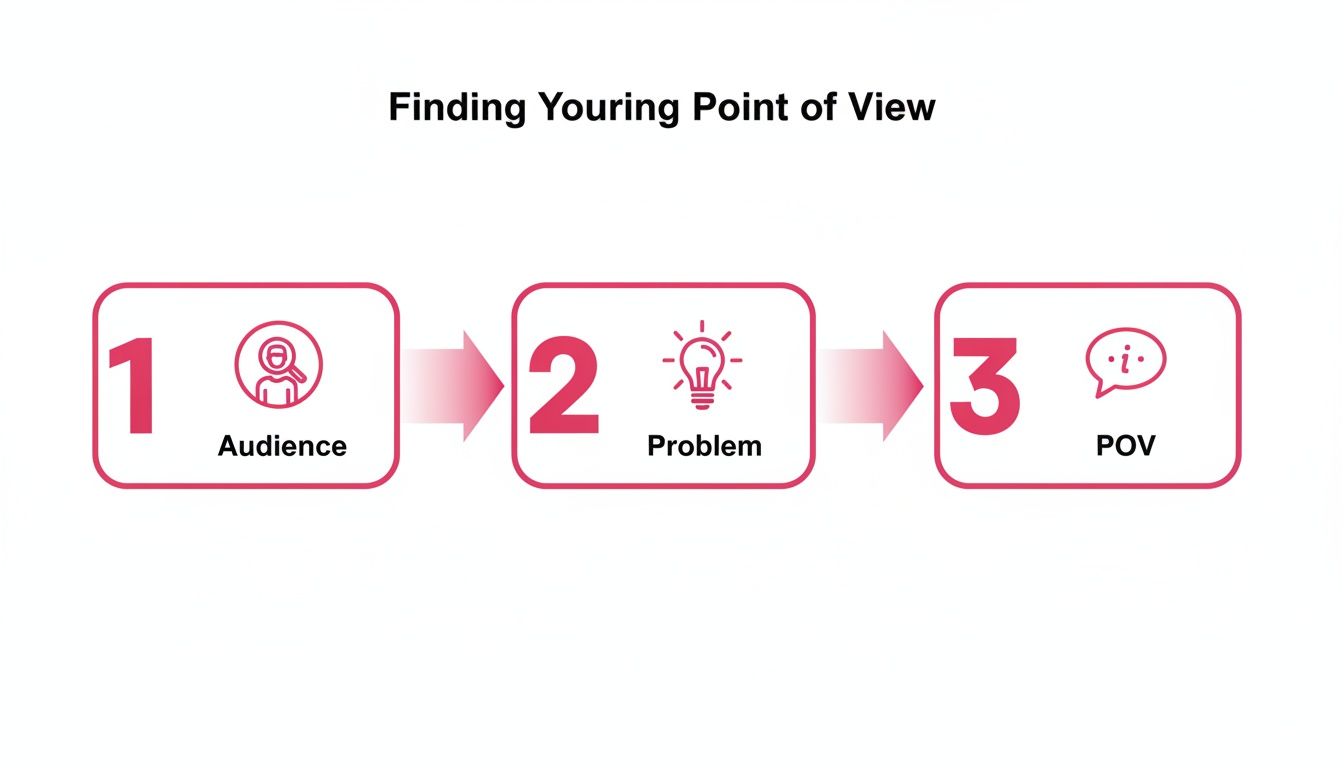
This simple flow—from deep audience understanding to a specific problem and then a clear point of view—is what gives your content its focus.
From one pillar to many assets
Let’s stick with the cybersecurity firm example. Their pillar piece is a guide titled "The Law Firm's 5-Step Ransomware Response Plan."
From that single asset, they can create a whole sprint’s worth of content without starting from scratch.
Here's what that might look like:
Five short LinkedIn posts: Each post unpacks one of the five steps from the guide.
A two-minute video: The founder explains the single most critical mistake law firms make during a cyber-attack.
An email newsletter: This summarises the guide's key takeaways and links back to the full download.
A checklist PDF: A simple, one-page version of the response plan that the sales team can use.
This isn't about creating more content; it's about getting more value from the effort you're already putting in. It’s a system that creates structure, gives your team confidence, and ensures every piece of content has a strategic purpose.
Create content that genuinely helps your audience
Let's be honest, your audience is drowning in generic content. They don't need another high-level article about industry trends. They’re desperate for practical help that solves a specific problem they're wrestling with right now.
Your goal isn't to sound smart. It's to be genuinely useful.
When you create something that helps a potential client solve a small problem, you build trust and show your expertise in a way no sales pitch ever could. You're not selling; you're serving. That approach immediately sets you apart.
Move beyond the blog post
For service businesses, the blog post is often the default format. And while articles have their place, your audience takes in information in all sorts of ways. To really connect, you need to deliver help in the format that’s easiest for them.
This means thinking about utility first, not just writing.
Simple Checklists: Imagine a downloadable PDF checklist, like a "10-Point Security Audit for New SaaS Onboarding." It’s practical and easy to share.
'How-To' Guides for Niche Problems: A step-by-step guide that walks someone through a tricky task is a brilliant way to establish authority.
Short, Insightful Videos: A punchy two-minute video explaining a key concept is often more powerful than a 1,000-word article nobody has time to read.
These formats don't just feel more helpful; they are more helpful. They give your audience a quick win. If you're struggling to get your expertise down on paper, our guide on how to write website content when you’re not a writer is a great place to start.
A practical example in action
Imagine a tech consultancy that helps businesses migrate to a new CRM. They could write a generic post titled "The Benefits of a Modern CRM," which would get lost in the noise.
Or, they could create a two-minute video.
The title: “The 3 Mistakes That Will Derail Your CRM Migration (And How to Avoid Them).”
See the difference? This isn’t a sales pitch. It’s genuine advice that speaks to a real fear their ideal client has. It's instantly valuable, showcases expertise, and makes the consultancy the obvious choice when that client is ready to get serious.
When we embed with a team, this is often the very first thing we fix—shifting their content from being self-promotional to genuinely helpful. This change alone can completely transform how potential clients see the business.
This focus on helpful, visual content is especially critical for reaching Australian audiences. Video is king, making up a massive 64% of all digital content consumed. With 87.5% of internet users watching videos and 78% preferring to learn about new products this way, it’s a non-negotiable part of a modern content strategy. Explore more about Australian marketing statistics to see just how crucial this format has become.
Distribute content without wasting your time
You’ve just created a helpful piece of content. But now you have to get people to actually see it. This is where most founders get stuck. They stare at a dozen social media channels and feel completely overwhelmed.
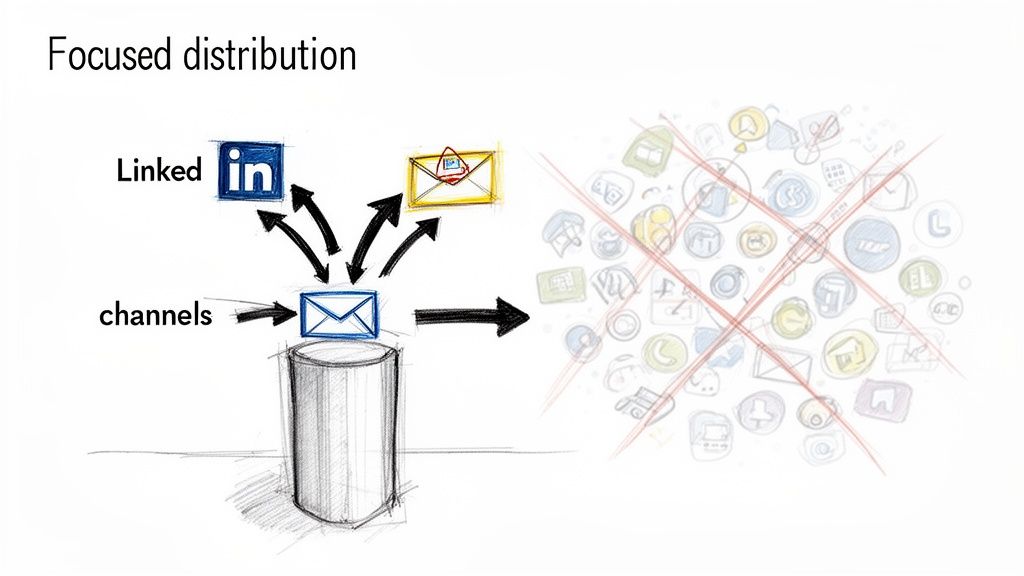
The gut reaction is to be everywhere at once, but that just spreads your energy too thin. It's a recipe for burnout, not results. The goal isn't to blast your content everywhere; it's to thoughtfully place it in the one or two places your ideal clients already spend their time.
For most B2B service businesses, this means doubling down on just two channels: LinkedIn and your email list. That’s it. You can safely ignore the noise from everywhere else until you have those two working like a well-oiled machine.
Get maximum value from every asset
The secret to distribution that doesn't drain your soul is repurposing. It’s taking one significant piece of work—like your pillar article—and slicing it into many smaller pieces. This respects your audience's time and meets them where they are.
When we embed with a team, this is one of the first systems we build. It kills the daily panic of “what on earth should we post today?” and replaces it with a calm, repeatable process.
The real shift happens when you stop thinking of distribution as a final step and start seeing it as part of the creation process. You build the repurposing plan right from the beginning.
A practical example of smart repurposing
Let’s say you’ve just finished a brilliant case study about how you helped a client solve a major problem. Instead of just slinging a link onto LinkedIn with a boring "check out our new case study" caption, you get strategic.
From that one asset, you can easily create:
A LinkedIn post with a direct quote: Pull the most powerful testimonial from the client. Turn it into a simple image and share it with a short caption telling the human story behind that quote.
A short video clip: Ask the client if they'd be willing to record a 30-second summary of their experience on their phone. It’s authentic and far more powerful than a slick corporate video.
A one-page PDF for your sales team: Create a clean summary of the case study that your team can attach to emails or bring into meetings. Make it scannable and punchy.
An email to your newsletter list: Don't just link to the case study. Tell the story behind the project. People connect with stories, not just results.
This methodical approach ensures every piece of content works much harder for you. It builds a consistent presence, creates confidence, and generates real momentum—without adding chaos to your week.
Your first step toward a clearer content strategy
If this all feels a bit overwhelming, that's normal. It doesn't mean you're behind. It just means you haven't had the right structure to work from.
The chaos so many service companies feel comes from trying to run in a dozen different directions without a solid foundation.
The goal isn't to do everything at once. It's about taking one deliberate, confident step forward that makes all the next steps easier. That's how you build real momentum.
Start by fixing your positioning
Before you worry about content sprints or distribution channels, pull back and focus on the very beginning. The single most important first step is defining how to create a content strategy that’s truly connected to your business goals.
That starts with your positioning.
Go back to the drawing board and get painfully clear on who you serve and what specific problem you solve for them. Write it down. Debate it with your team. Get it so clear that anyone in your company can repeat it without thinking.
This single act of clarification is the bedrock for everything else. When we embed with a team, this is the very first gap we work on fixing.
Getting your positioning right isn’t a fluffy marketing exercise; it’s a core business function. It gives your content a purpose, gives your team confidence, and brings a predictable rhythm to your growth. This relies on a deep understanding of your market, which is why it’s vital to learn how to conduct market research that actually leads to a decision.
This clarity is what finally breaks the cycle of "random acts of marketing." It's the fundamental shift that injects real purpose and direction into your content.